High Access Solutions Home

Category

Safety & Compliance

19 articles

One Operator, Two Safety Cases: A Lone-Working Framework for Powered Access

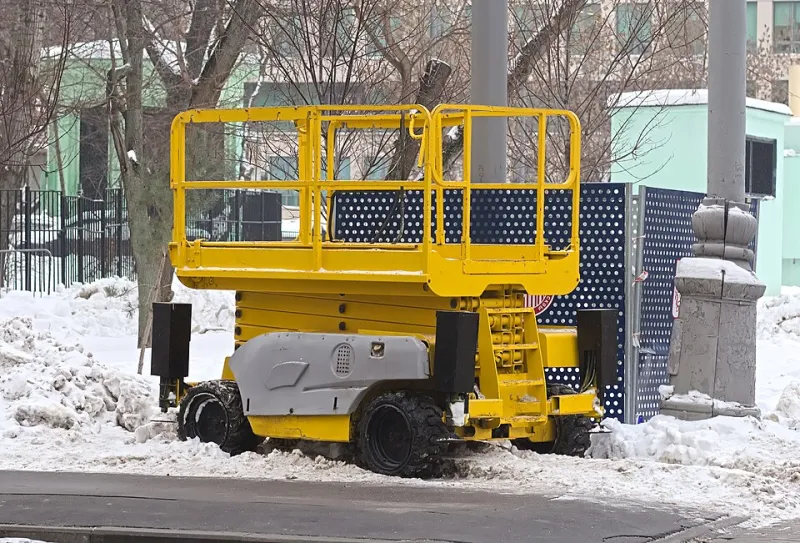
Lone working in a MEWP is not simply a staffing choice; it changes the supervision, communication and rescue case that must be in place before the platform leaves the ground. This framework helps UK facilities teams and contractors test suitability, set check-in arrangements and confirm that rescue is genuinely available.

A Reserve Descent, Not an Assumption: Verifying MEWP Auxiliary Lowering on UK Sites

A Reserve Descent, Not an Assumption: Verifying MEWP Auxiliary Lowering on UK Sites

Auxiliary lowering is often treated as a background feature of a MEWP until a platform is stranded and the site has to improvise. This article sets out how facilities teams and contractors can verify, record and brief the reserve descent system without confusing operator pre-use checks with competent maintenance testing.

The Report Is a Decision Tool: Auditing MEWP Thorough Examination Records

The Report Is a Decision Tool: Auditing MEWP Thorough Examination Records

A MEWP thorough examination report is often treated as a certificate to be filed, rather than a management record to be interrogated. This guide explains what facilities teams should expect from a credible report, which vague findings should be challenged, and how examination outcomes should feed directly into access planning and equipment availability.

Reading Wind Twice: Defensible Stop-Go Decisions for Urban MEWPs

Reading Wind Twice: Defensible Stop-Go Decisions for Urban MEWPs

Urban powered-access jobs rarely produce a single reliable wind reading: forecasts, street-level instruments and platform-height exposure can tell different stories. This article sets out a practical stop-go framework and a contemporaneous decision record that helps facilities teams and contractors justify why work continued, paused or stood down.

When the Ladder Wins: Building a Reasoning Trail for Short-Duration Work at Height

When the Ladder Wins: Building a Reasoning Trail for Short-Duration Work at Height

Ladders remain the most-used and least-explained access tool on UK sites. This article sets out a practical reasoning trail — four test questions, selection evidence, positioning records and a one-page assessment — that shows a ladder was a considered choice rather than a default. It is not an argument for banning ladders, but for evidencing why the alternative was genuinely worse.

Beneath the Chassis: Evidencing Ground Conditions for MEWP Set-Up

Beneath the Chassis: Evidencing Ground Conditions for MEWP Set-Up

Stability incidents involving MEWPs often begin beneath the machine, not in the basket. This pre-deployment guide sets out how to assess load-bearing capacity, hidden voids, slopes and weather-softened ground, and how to record the survey as part of the handover.

When the Cabinet Is the Hazard: Rethinking Fall Arrest Kit Storage and Inspection

When the Cabinet Is the Hazard: Rethinking Fall Arrest Kit Storage and Inspection

Fall arrest harnesses, lanyards and rescue kits are often stored in damp plant rooms or shared cabinets where inspection tags go missing and condition is assumed rather than verified. This practical guide sets out a storage, pre-use and periodic inspection regime that facilities managers can apply before anyone clips on.

Beyond the Lanyard: Closing the Rescue Gap in UK Work-at-Height Planning

Beyond the Lanyard: Closing the Rescue Gap in UK Work-at-Height Planning

Fall prevention dominates most work-at-height plans, yet rescue after a fall is a separate legal and practical duty. This article sets out how UK facilities managers can test their rescue arrangements, from equipment compatibility to scenario-based training, and avoid the assumptions that leave sites exposed.

Cold Snap, High Stakes: A Winter Assurance Framework for Work at Height

Cold Snap, High Stakes: A Winter Assurance Framework for Work at Height

Winter conditions alter the risk profile of every access task, from pre-use inspection to emergency retrieval. This framework helps UK facilities managers and contractors test their arrangements before cold weather exposes gaps. It focuses on practical controls, clear stop rules and equipment choices that suit short daylight and low temperatures.